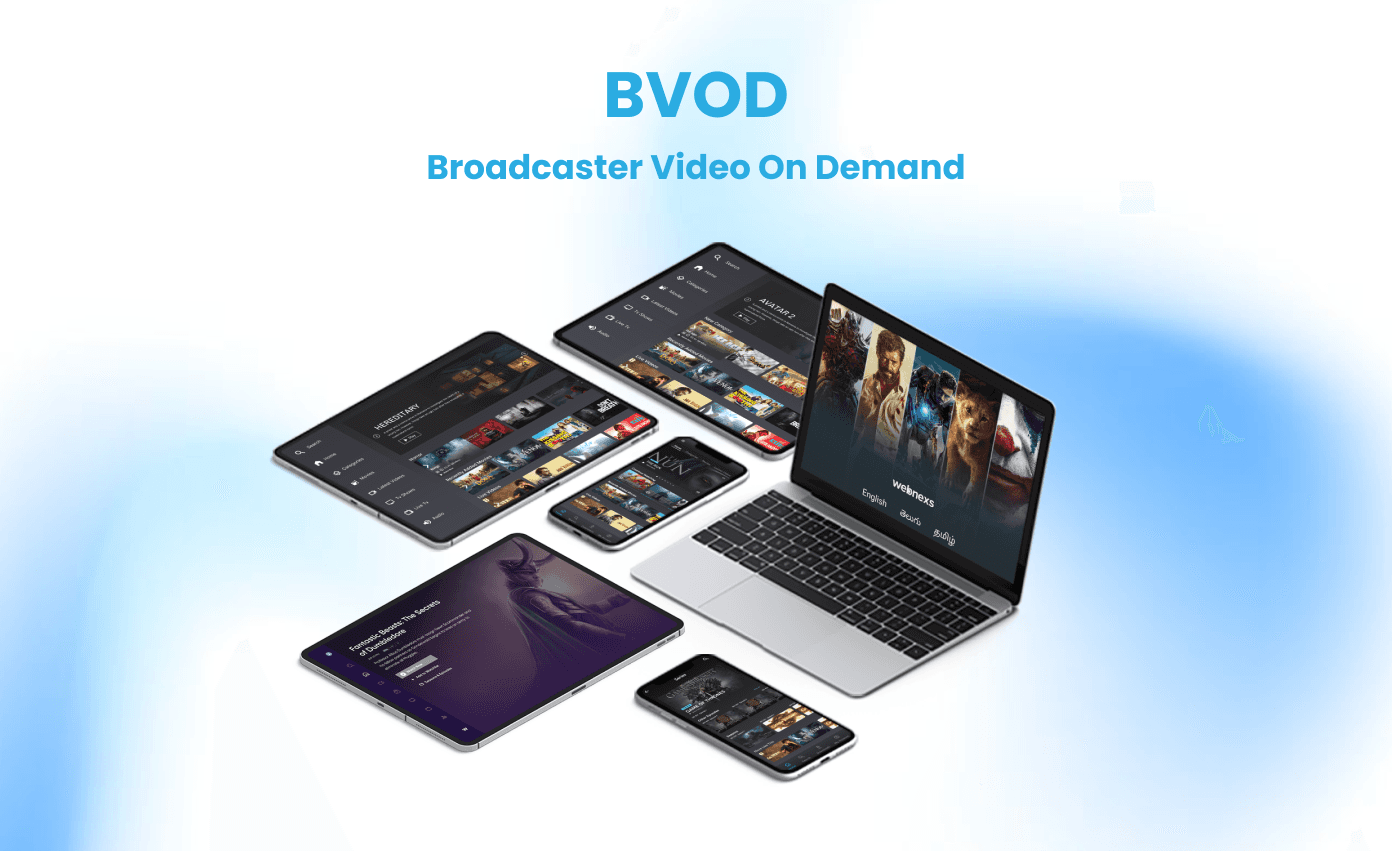
Broadcaster Video On Demand (BVOD) blends traditional TV reach with the flexibility and personalization of digital streaming. As audiences shift from linear to online viewing, BVOD has become a key strategy for monetization and engagement.
Introduction
Broadcaster Video On Demand (BVOD) combines the massive reach of traditional TV broadcasters with the personalization and flexibility of digital streaming. As audiences continue migrating from linear TV to internet-delivered experiences, BVOD has emerged as one of the most important monetization and audience engagement strategies for broadcasters and media owners.
This article explains:
What BVOD actually is
How it’s different from other video models
The benefits and challenges
Technical and business considerations
Why it matters for the future of video
How Revidd helps power BVOD infrastructure
Let’s dive in.
1. What Is BVOD?
BVOD (Broadcaster Video On Demand) refers to video-on-demand services offered by traditional broadcast networks that deliver their content over the internet instead of (or in addition to) traditional linear channels.
A BVOD service typically includes:
Catch-up TV (recent episodes)
Full-episode VOD libraries
Exclusive online-only streaming content
Short-form digital clips from broadcast shows
Unlike typical OTT services built by tech platforms or digital media companies, BVOD comes from institutions rooted in broadcast content , with decades of show libraries, audience trust, and brand equity.
2. Why BVOD Is Growing Now
Several forces are accelerating BVOD adoption:
A. Declining Linear TV Consumption
Audiences , especially younger ones , spend less time on traditional live broadcast TV and more on internet streaming.
B. Demand for Flexible Viewing
Viewers now expect:
Watch-anywhere content
Pause/rewind options
Seamless cross-device playback
BVOD satisfies these expectations without abandoning broadcaster branding.
C. Monetization Shifts
With advertising dollars shifting to digital and CTV, BVOD allows broadcasters to capture:
Targeted digital ad revenue
Premium video inventory
Measurable campaign performance
D. Content Value Maximization
Broadcast networks often hold large libraries of episodic and long-tail content. BVOD enables ongoing monetization beyond first-run airtime.
3. BVOD vs SVOD vs AVOD vs FAST
It helps to compare BVOD to other video models:
Model | Viewer Pays? | Ads? | Format | Typical Use |
BVOD | Usually free | Yes | On-demand broadcaster content | Broadcast catch-up & streaming |
SVOD | Yes | No | Subscription library | Premium OTT services |
No | Yes | Free VOD apps | Free content monetized by ads | |
FAST | No | Yes | Linear-style channels | Lean-back streaming |
The primary differentiator for BVOD is its lineage from broadcast channels, combined with streaming delivery and targeted monetization.
4. How BVOD Monetization Works
A. Advertising
Most BVOD services are free to users and monetized by ads. The main methods include:
Pre-Roll Ads
Mid-Roll Ads
Banner/Overlay Ads
Programmatic Advertising
In the digital ecosystem, advertisers increasingly value targeted impressions and measurable performance , something traditional broadcast cannot provide without streaming.
B. Hybrid Models
Some broadcasters experiment with hybrid approaches:
Subscription plus limited ads
Premium content behind paywalls
Bundled access with partners
But the dominant revenue source for BVOD remains advertising.
5. BVOD Tech Stack: What You Need
Technical execution separates successful BVOD services from mediocre ones. A complete BVOD stack should include:
1. Content Ingestion & Preparation
This handles:
Live capture
Encoding
Transcoding to multiple bitrates
2. Scalable Content Delivery
Delivering to:
CTVs
Mobile apps
Web browsers
Tablets
3. Ad Insertion
This is where monetization becomes real , and the method matters:
Server-Side Ad Insertion (SSAI)
SSAI stitches ads into streams before delivery, giving:
Seamless playback
Ad blocker resistance
Consistent reporting
Client-Side Ad Insertion (CSAI)
Player requests ads locally , but this is vulnerable to:
Ad blockers
Fragmented metrics
Playback disruption
For BVOD at scale, SSAI is the backbone of professional monetization.
4. Personalization & Targeting
To compete with OTT giants, BVOD services must move beyond one-size-fits-all scheduling and deliver:
Personalized recommendations
Dynamic ad targeting
Behavior-driven content placement
5. Analytics & Attribution
Advertisers demand measurement. BVOD platforms should capture:
Ad impressions and completion data
Viewer behavior
Engagement and churn signals
Conversion and campaign ROI metrics
6. Viewer Experience Considerations
For BVOD to succeed, it must feel like modern streaming , not a broadcast relic.
Viewers expect:
Seamless playback (no buffering)
Everywhere access (web, mobile, CTV)
Relevant content recommendations
Minimal friction from ads
Poor UX , especially around buffering or ad overload , directly impacts engagement and monetization.
7. BVOD Use Cases Across Broadcasters
A. Catch-Up TV
Viewers can watch shows they missed on linear TV.
B. Full Episode Libraries
Popular past seasons or catalog content made available on demand.
C. Exclusive Digital Specials
Content produced specifically for online audiences.
D. Regional and Niche Channels
Localized content tailored to specific demographics.
8. Challenges BVOD Platforms Face
Even with strong content and established brands, BVOD platforms encounter challenges:
A. Licensing & Rights
Broadcast rights often restrict digital distribution windows or regions.
B. Ad Technology Integration
SSAI, ADS, and programmatic systems must be tightly integrated.
C. Cross-Device Consistency
Data and playback performance must be unified across CTV, mobile, and web.
D. Data Strategy
As advertisers demand targeting, BVOD platforms must leverage first-party viewer data responsibly and transparently.
9. Revidd Perspective: BVOD as Modern Broadcast Infrastructure
At Revidd, we view BVOD as a strategic evolution of broadcasting , not a replacement.
Successful BVOD platforms combine:
Traditional broadcaster strengths (content, brand, schedules)
Next-generation streaming capabilities
Scalable monetization tech
Unified analytics
We see three infrastructure imperatives for BVOD:
SSAI-native monetization , seamless ads and predictable revenue
Scalable delivery , consistent playback across devices and networks
Data-driven personalization , recommendations and targeting that keep viewers engaged and advertisers happy
This infrastructure backbone turns BVOD from a catch-up service into a growth engine.
Final Takeaways
BVOD is far more than “broadcast content on the internet.”
It is:
A bridge between traditional TV and modern streaming
A revenue driver backed by advertising and data
A viewer experience optimized for choice and control
A technical challenge that requires robust infrastructure
For broadcasters and media owners in 2026 and beyond, BVOD is a growth imperative , provided it is built on:
Seamless delivery
Targeted monetization
Rich analytics
Cross-device consistency
With the right infrastructure, BVOD becomes a strategic asset, not a broadcast afterthought.
Choosing a platform for catch-up and BVOD? Compare the best OTT platforms for broadcasters.


